Tanzania Honey: Market, Origins & Sourcing Guide
Overview
Tanzania is consistently identified as one of Africa’s largest honey producers, with 2021 national output estimated at roughly 31,000–31,600 tonnes of honey and around 1,800–1,900 tonnes of beeswax. Some reporting describes the country as second in Africa and tenth globally by production, though an independent FAO analysis of 2023 data instead places Ethiopia as Africa’s top producer — a discrepancy reflecting different years and methodologies rather than a settled fact. What is not in dispute is scale relative to potential: analysts estimate Tanzania’s woodlands could support roughly 138,000 tonnes of honey and 9,200 tonnes of beeswax annually if fully exploited — current output represents a fraction of theoretical capacity.
Production & Origins: The Miombo Woodland Base
More than 95% of Tanzanian beekeeping takes place in Miombo woodland across the western and southern regions. A 2025 peer-reviewed survey lists ten high-potential production regions: Tabora, Katavi, Kigoma, Shinyanga, Geita, Kagera, Rukwa, Songwe, Mbeya, and Singida, with Dodoma and Iringa also cited among major producing areas. Tabora stands out specifically — repeatedly described as “the honey region” and credited with producing roughly half of the country’s honey. Forests and woodlands covering an estimated 55% of Tanzania’s land area are reported to support around 9.2 million honeybee colonies, with the sector estimated to involve close to two million people.
Beekeeping Methods
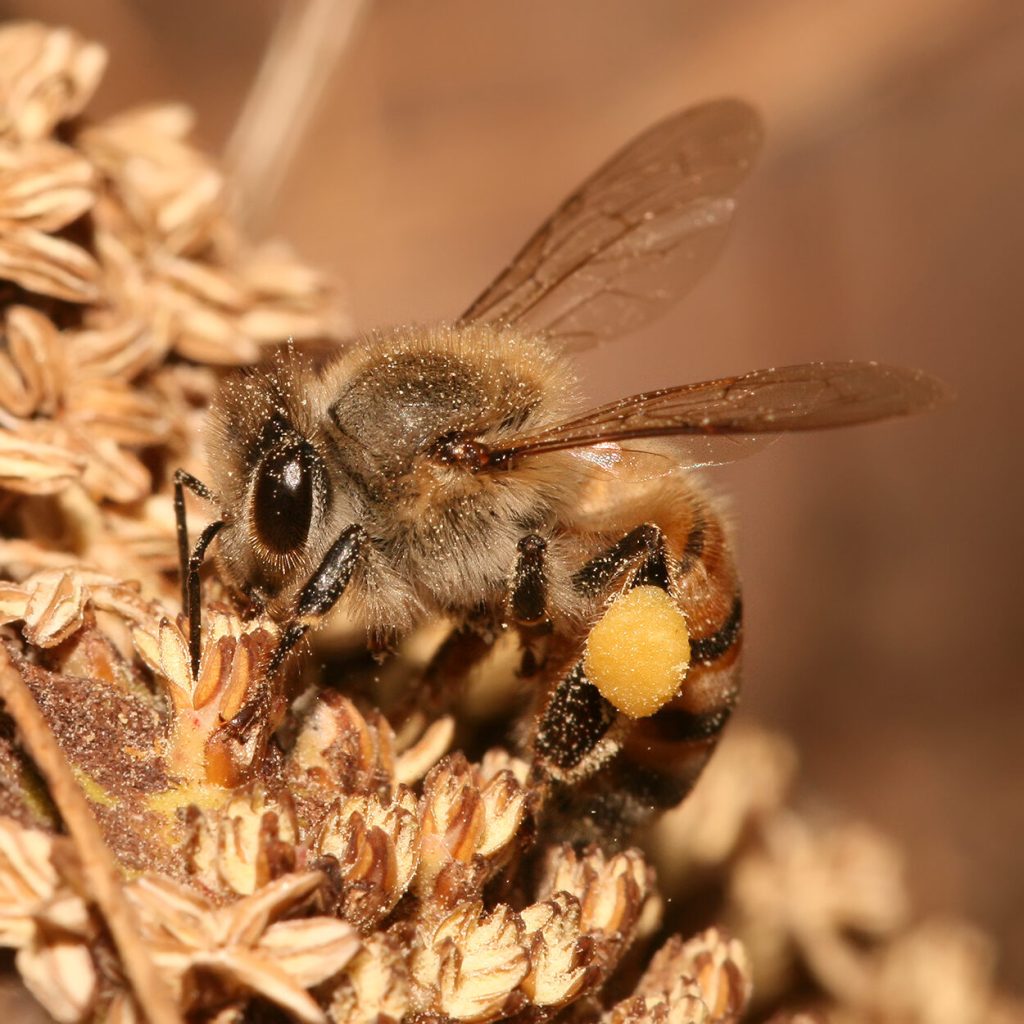
Tanzanian beekeeping remains overwhelmingly traditional: national assessments found roughly 1.5 million traditional (log or bark) hives against about 23,650 improved hives (top-bar or Langstroth) — traditional hives account for an estimated 90% of national hive stock. Performance differs substantially: top-bar hive users achieve around 84.7% colony occupancy and average yields near 22.2 kg per hive annually, versus roughly 65.4% occupancy and about 8 kg per hive for log-hive users. Three honeybee subspecies are documented: Apis mellifera scutellata on the plateau and savanna (most widespread), A. m. litorea in coastal lowlands, and A. m. monticola in mountain areas above roughly 1,500m.
Honey Types & Floral Sources
Tanzanian honey is generally marketed by botanical/geographic origin rather than a single national blend: Miombo honey (dark, from Brachystegia/Julbernardia woodland), Acacia honey (lighter, milder), and honey from Itigi thicket, clove, and mango-growing coastal areas such as Pemba. A study in Food Chemistry Advances found botanical origin and geographic zone measurably affect physicochemical properties and consumer acceptance.
Quality Standards & Processing
The sector operates under the Beekeeping Act (2002) and Tanzania Bureau of Standards (TBS) standards; a “Tanzania Honey Trademark” quality seal was formally registered in July 2024. Parameter ranges reported for Tanzanian honey samples — water content below 20%, sugars above 65%, ash below 0.5%, free acidity below 40 meq/kg, HMF below 40 mg/kg — sit broadly in line with Codex Alimentarius-style benchmarks. Processing remains largely artisanal at the harvesting level, though value-addition capacity has expanded, with reporting describing eight medium-to-large processing facilities built between 2021 and 2025 in Tabora, Kigoma, Singida, Iringa, Katavi and Geita.
Trade & Export Context
Export figures vary considerably by source and year. FAO-linked reporting put annual honey-and-beeswax export revenue at roughly $1.7–12.9 million referencing 2021 data. Tanzanian government reporting from 2024–2026 claims a sharper rise — from about TZS 11.4 billion in 2024 to TZS 19.2 billion by early 2025 — attributed to a domestic beekeeping-promotion campaign; these newer figures have not been independently cross-verified and should be treated as claimed rather than confirmed. Key export destinations cited include the EU (Germany, UK, Netherlands, Ireland) plus the UAE and Oman, with beeswax sold mainly to Japan, the USA and EU buyers. UN Comtrade-derived figures for 2023 show Tanzanian natural honey exports of roughly $848,510 across about 337,269 kg, led by Germany, Ireland, Netherlands, Kenya and Rwanda — figures far more modest than the government’s 2025/26 claims, a gap buyers should note.
Current Market
| Market | Type | Grade | Price | Observed | Source |
|---|---|---|---|---|---|
| Tanzania | Export | — | USD 2.53/kg | 1 Jan 2024 | UN Comtrade unit value (via Selina Wamucii) |
| Tanzania to Bangladesh | Export | — | USD 2.87/kg | 29 Jan 2026 | Tridge trade transaction data |
- MDPI (journal Insects) — Status of Beekeeping Industry in Tanzania: Resources, Practices, and Conservation — https://www.mdpi.com/2075-4450/17/2/191 — 2026-09-24
- FAO Tanzania — Partnering for conserving the Miombo forest and enhancing beekeeping production — https://www.fao.org/tanzania/news/detail/partnering-for-conserving-the-miombo-forest-and-enhancing-beekeeping-production/en — 2026-09-24
- FAO Newsroom — World Bee Day 2025: Africa honey production has highest global growth rate — https://www.fao.org/newsroom/detail/world-bee-day-2025--africa-honey-production-has-highest-global-growth-rate/en — 2026-09-24
- Daily News (Tanzania) — Tanzania claims EAC helm in honey export with 19bn/- generated in 2025/26 — https://dailynews.co.tz/tanzania-claims-eac-helm-in-honey-export-with-19bn-generated-in-2025-26/ — 2026-09-24
- ScienceDirect (Food Chemistry Advances) — Influence of botanical origin and geographical zones on physicochemical properties of honey in Tanzania — https://www.sciencedirect.com/science/article/pii/S2772753X24001278 — 2026-09-24